Is It Really Near Mint? How to Judge Card Condition
Condition makes or breaks a card value. Learn how to check corners, edges, surface, and centering like a pro before you buy, sell, or grade.
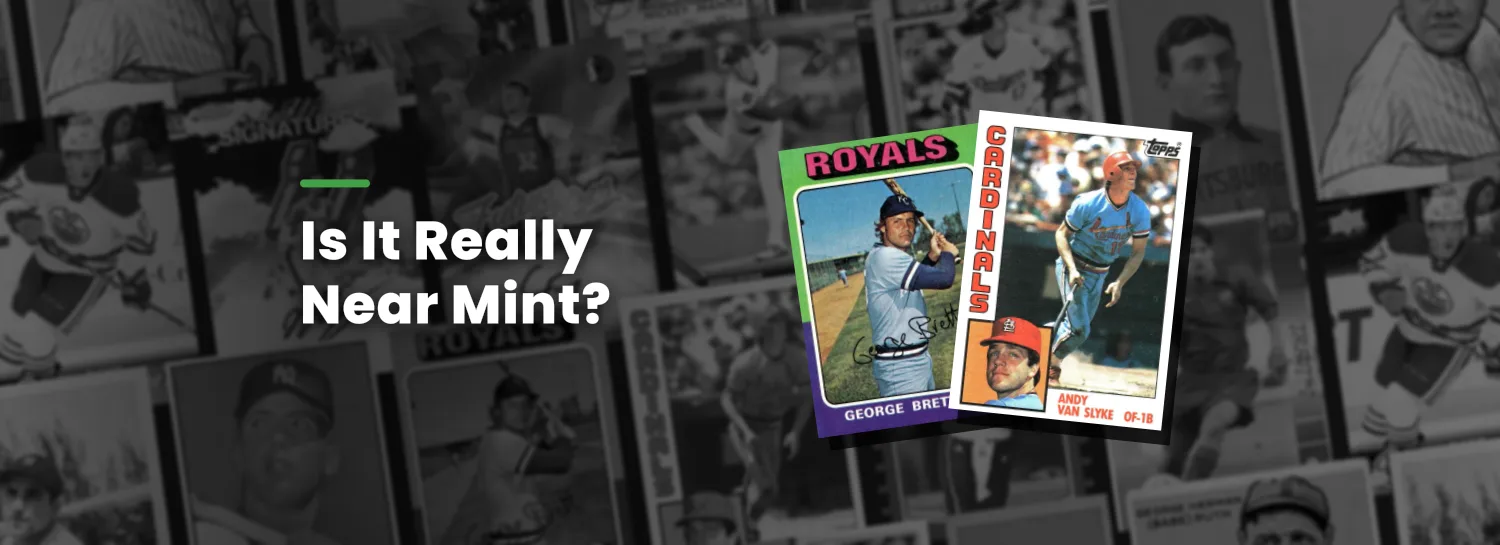
“Near Mint.” Two words that show up on just about every raw card listing online. And if you’ve bought enough raw cards, you know those two words can mean anything from “basically perfect” to “I looked at it from across the room once.”
Here’s the thing: condition is the single biggest factor in what a card is worth. The same card can be a few dollars in rough shape or hundreds in great shape. Learning to judge condition yourself is the best skill you can build as a collector, and it’s easier than it sounds.
Our full Card Conditions Guide breaks down every condition from Mint to Poor. Here’s the quick version.
Key Takeaways
- Check four things: corners, edges, surface, and centering.
- Flip it over. The back counts just as much as the front.
- Use light at an angle. Scratches that are invisible head-on show up instantly.
- Vintage gets more leniency than modern, so adjust your expectations by era.
- When selling, under-promise. Call it EX-MT and let the buyer be pleasantly surprised.
The Four Things That Matter
Corners
Corners show wear first. Look for a crisp, sharp point. Soft corners might still grade okay, but fuzzy corners (white showing through), dings, or creases drop value fast. Check all four. One bad corner matters more than three perfect ones.
Edges
Run your finger lightly along each edge. You’ll feel chipping or roughness you can miss with your eyes. On colored borders, edge wear often shows up as a thin white line.
Surface
This is where cards hide their secrets. Hold the card under a bright light and tilt it slowly. Penny sleeve scratches, print lines, and wax stains (on older cards) all pop out at the right angle.
Centering
Look at the borders. Are they about even on both sides? Centering is written as a ratio: 50/50 is perfect, 60/40 is still fine for most grades, and 75/25 or worse is a real problem. Check left to right and top to bottom. A card can be perfect one way and way off the other.
The Condition Ladder
From best to worst, raw cards are usually described as: Mint, Near Mint, Excellent-Mint, Excellent, Very Good, Good, Fair, and Poor.
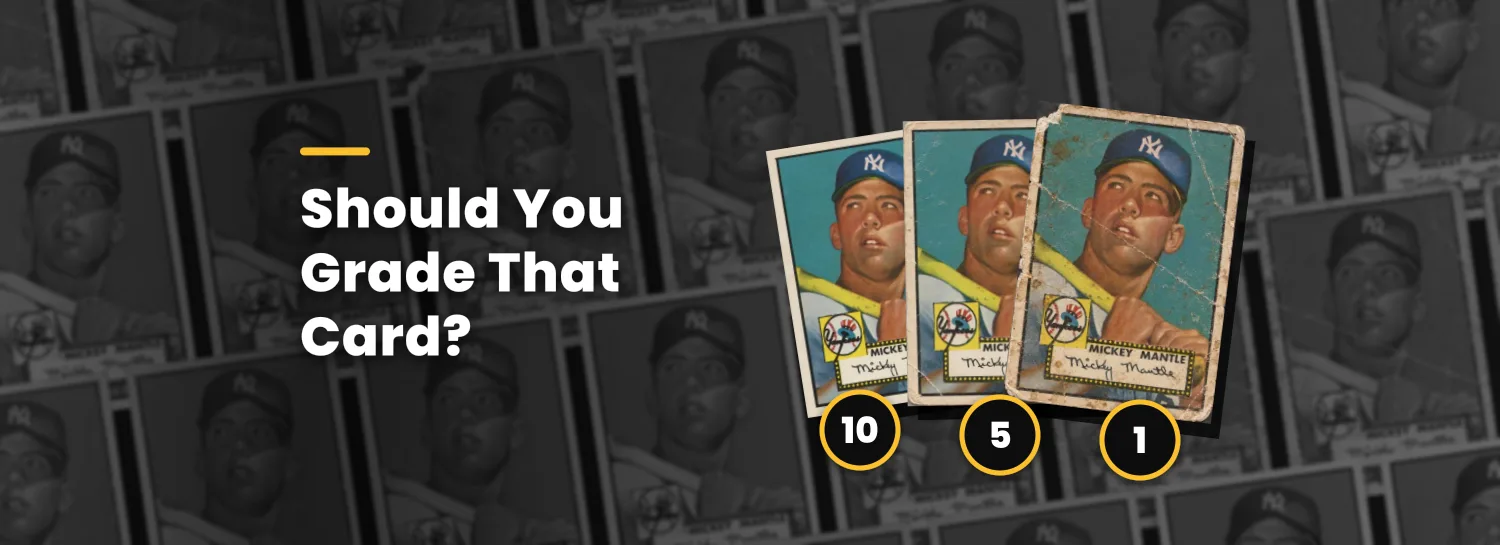
If you plan on grading, it helps to know these map roughly onto the PSA scale. Near Mint is around a PSA 7, Excellent is around a 5, and Poor is a 1. It’s only an estimate, though. The grader always has the final say. Our Card Grading Explained guide covers how PSA, BGS, and SGC score cards.
Vintage vs. Modern
A Very Good card from 1955 might be a great find. A Very Good card from 2020 is usually easy to replace with a cleaner copy. Older cards were printed and cut less precisely and had decades to pick up wear, so collectors cut them more slack. Modern cards are often protected straight out of the pack, so the bar is higher. Collecting older cards? The Vintage Cards Guide goes deeper on what to expect.
Selling? Be the Seller You’d Want to Buy From
Be specific (“Near Mint with one slightly soft back corner”), photograph any flaws, and always check the back. Honest descriptions mean fewer returns and more repeat buyers.
Keep Notes on Every Card
Once you start looking closely at your cards, you’ll want to remember what you found. SetScribe lets you add condition notes to every card in your collection, so you can spot your best grading candidates later without pulling every card out of its toploader. See how it works with the Card Inventory Tracker.
Read the Full Guide
The Card Conditions Guide covers every condition in detail, including the common edge and surface flaws to watch for. Bookmark it for your next card show.
Happy collecting.
 Go deeper with the full guideCard Conditions GuideEvery condition from Mint to Poor, and how to check corners, edges, surface, and centering yourself. 6 Minute Read.