Owning a Piece of History: A Beginner Look at Vintage Cards
Vintage sports cards connect you to the history of the game. Learn what counts as vintage, why lower grades are your friend, and how to avoid fakes.
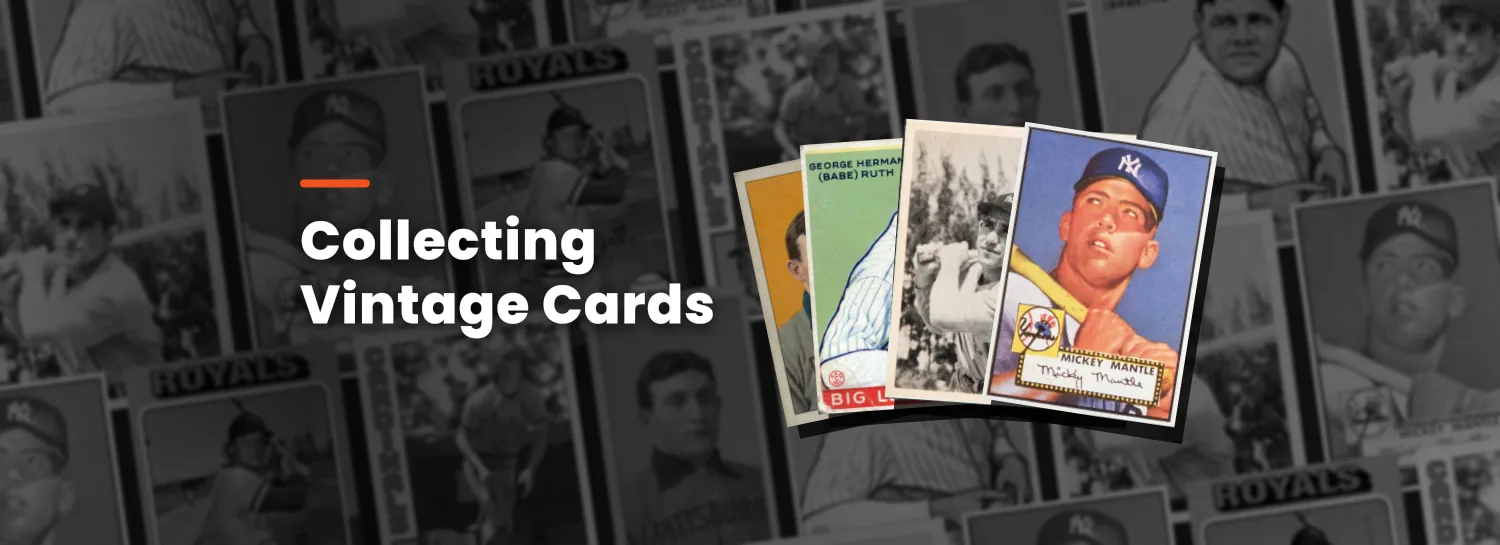
There’s something special about holding a card that was printed before your grandparents could drive. The cardboard is a little rougher, the colors a little softer, and the player on the front might have been in his prime when the card was pulled from a wax pack for a nickel.
Vintage cards are a different world from modern collecting. Fewer parallels, no serial numbers, no “hits.” Just history. And you don’t need a Mickey Mantle budget to get started.
Our full Vintage Cards Guide covers everything from tobacco-era cards to the 1970s. Here’s the quick tour.
Key Takeaways
- Vintage usually means pre-1980. Production exploded in the early 1980s, which makes older cards scarcer.
- Lower grades are your friend. A PSA 3 to 5 can be a beautiful, affordable way to own a key card.
- Condition rules are looser. Off-centering and soft corners are expected on 60+ year old cards.
- Watch for fakes and alterations. Trimming, restoration, and reprints are real risks.
- Be patient. Vintage supply is fixed, and the right card at the right price usually comes around again.
What Counts as Vintage?
Collectors generally split it into three eras:
- Pre-war (before 1945) - tobacco cards from the late 1800s and early 1900s. The rarest of the rare.
- Post-war (1945 to 1969) - the golden age of Bowman and Topps. Mantle, Mays, Aaron.
- 1970s - often counted as vintage, and usually more affordable.
Football and basketball have their own landmark cards too, like the 1957 Topps Jim Brown rookie and the 1986-87 Fleer Michael Jordan rookie.
Why Lower Grades Are a Great Deal
Here’s the secret most new vintage collectors miss: you don’t need a high grade to own something incredible. Cards from the 1950s were cut imperfectly, handled by kids, and stored in shoeboxes for decades. A sharp-cornered, perfectly centered vintage card is genuinely rare, and priced like it.
A rough guide for vintage grades:
- PSA 1 to 3 - still valuable for major stars
- PSA 4 to 5 - often the affordable way into key cards
- PSA 6 to 7 - a solid collector grade
- PSA 8 and up - excellent for vintage
Starting with commons from a key set, like a 1952 Topps common, is a fun way to own history without spending thousands. Our Card Conditions Guide covers how condition standards shift for older cards.
Protect Yourself From Fakes
Vintage cards come with risks modern cards mostly don’t. Watch out for:
- Trimming - edges cut down to fake sharp corners.
- Restoration - color touch-ups and pressed-out creases.
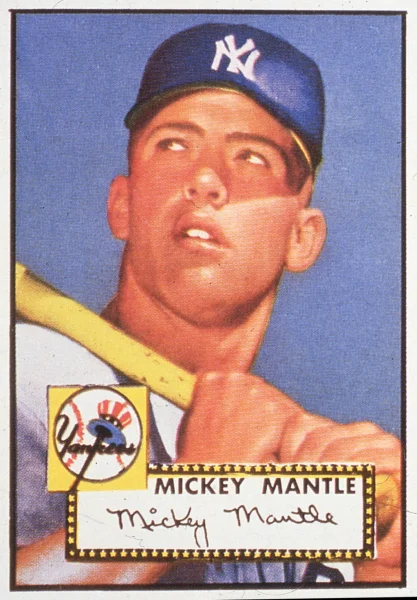
- Reprints and counterfeits - a “1952 Topps Mantle” for $50 is almost certainly a reprint.
- Altered backs - always look at both sides.
For anything expensive, buy graded, buy from reputable dealers with return policies, and inspect cards in person at shows when you can. The authenticity section of the guide has more red flags to watch for.
Track Vintage Alongside Modern
SetScribe’s AI can identify vintage cards from the 1950s forward, so your 1956 Topps commons can live right next to your modern rookies in one organized collection. Older tobacco-era cards can still be added by hand. See how it works with the Card Inventory Tracker.
Read the Full Guide
The Vintage Cards Guide goes deeper on condition standards, how vintage values work, and where to buy. If you’re thinking about slabbing your vintage finds, our Card Grading Explained guide is a good next read.
Happy collecting.
Go deeper with the full guideVintage Sports Cards GuideKey sets from T206 to 1975 Topps, how vintage condition differs, and how to spot reprints. 7 Minute Read.